Showing posts with label trees. Show all posts

Wednesday, February 16, 2022

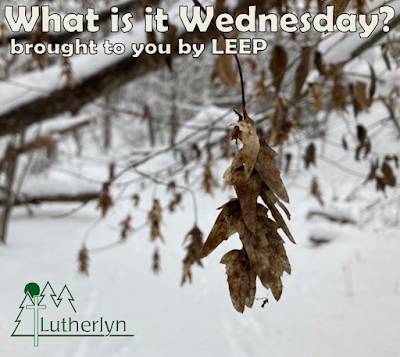
What is it Wednesday: February 16, 2022


Can you identify what's in this photo?


Each Wednesday morning 

on Camp Lutherlyn's Facebook page

 the Lutherlyn Environmental Education Program posts a photo. 


Readers have all morning and afternoon 

to make their best guess about what the photo is. 


Around 6 pm LEEP provides the answer and a brief explanation.


Each week's What is it Wednesday post 

will also be posted on the Nature of Lutherlyn blog, 

 after it is posted on Facebook,

sometimes with additional bonus information. 


In addition to bringing you current editions of What is it Wednesday 

on the Nature of Lutherlyn blog, 

we will be reposting old editions,

creating a What is it Wednesday archive. 


This photo was posted as a What is it Wednesday on

February 16, 2022.


And the answer is....


This leaf is not only red-colored, it is the leaf of a red maple tree. 


We have red maples on our minds, because it is maple sugaring season and at Lutherlyn the trees we tap for making maple syrup here are all red maples. Sugar maples have the most sugar in their sap, as the name implies, but red maples also have enough sugar in the sap to effectively make syrup. 

You can tell the difference between red maple leaves and sugar maple leaves by paying attention to some details. Red maple leaves generally have three main lobes - sugar maple leaves have five main lobes (picture the Canadian flag). The space between the lobes (known as the sinus) is v-shaped in red maples, and in sugar maples is more u-shaped. And the most reliable difference is that red maple leaves have serrated edges, while sugar maple leaves are smooth-edged between points.


Leaf shapes, however, are rather variable! You can sometimes find sugar maple leaves that have sinuses that are closer to v-shaped; and red maple leaves that have small points on the bottom of the leaf on each side – does that count as three or five lobes? And of course – leaves are not present on the trees year-round! So looking at the leaves is not always the best way to distinguish the type of tree.

The answer is in the name: Red! The leaves of red maples turn a bright red in the fall (as in this photo) but also the leaf stems, ends of the twigs, and the buds of red maples are all distinctly red. The twigs and buds of sugar maples are brown. Red maples are the most abundant and most widespread tree species in North America. They can grow in a wide variety of habitats, even in areas that are too wet for other trees to thrive, including sugar maples.

At our maple sugaring Saturday Safaris, participants learn other tricks for winter tree id as well – you need to know how to pick out a maple tree (whether it's sugar or red) from all the other trees in a forest so you know which ones to tap! We also include tapping trees, collecting sap, watching the process of making sap into syrup, and of course tasting syrup! The maple sugaring Saturday Safari is always the first Saturday in Marchbut maple sugaring experiences at Lutherlyn are available for school field trips and scout groups too. Check out www.Lutherlyn.com/ee  for info on these and other LEEP events!  

Like and follow Camp Lutherlyn on Facebook, to see What is it Wednesday posts when they come out and have the opportunity to share your guesses in the comments!

Thursday, January 20, 2022

What is it Wednesday: January 19, 2022


Can you identify what's in this photo?


Each Wednesday morning 

on Camp Lutherlyn's Facebook page

 the Lutherlyn Environmental Education Program posts a photo. 


Readers have all morning and afternoon 

to make their best guess about what the photo is. 


Around 6 pm LEEP provides the answer and a brief explanation.


Each week's What is it Wednesday post 

will also be posted on the Nature of Lutherlyn blog, 

 after it is posted on Facebook,

sometimes with additional bonus information. 


In addition to bringing you current editions of What is it Wednesday 

on the Nature of Lutherlyn blog, 

we will be reposting old editions,

creating a What is it Wednesday archive. 


This photo was posted as a What is it Wednesday on

January 19, 2022. 


And the answer is....


 These are the empty seed capsules of a hop hornbeam tree.

They may look like leaf clusters but they are not. These are the protective sheathing that covered the seeds of the hop hornbeam. The papery sheath has dried up and opened and the seeds have fallen out onto the forest floor, and this is what is left behind. This was the female flower of the hop hornbeam tree.

Hop hornbeam is a small understory tree (about 25-40 feet tall) with soft flaky bark. It is named for its female flowers, which look like the flowers of hop vines used in brewing beer. Like the similar but smooth-barked American hornbeam (also known as musclewood or ironwood) hop hornbeam has strong wood that was often used as tool handles in the past. In fact, both hornbeams are sometimes referred to as ironwood because they both have very strong, dense wood.

Some of the smaller details in the forest are more visible now that we have a thick coating of snow – these seed capsules are a good example, often they are less noticeable against a background of many types of dead leaves. What will you notice if you go out in the forest in the snow? 

Like and follow Camp Lutherlyn on Facebook, to see What is it Wednesday posts when they come out and have the opportunity to share your guesses in the comments!
Thursday, November 18, 2021

What is it Wednesday: November 17, 2021


Can you identify what's in this photo?


Each Wednesday morning 

on Camp Lutherlyn's Facebook page

 the Lutherlyn Environmental Education Program posts a photo. 


Readers have all morning and afternoon 

to make their best guess about what the photo is. 


Around 6 pm LEEP provides the answer and a brief explanation.


Each week's What is it Wednesday post 

will also be posted on the Nature of Lutherlyn blog, 

 after it is posted on Facebook,

sometimes with additional bonus information. 


In addition to bringing you current editions of What is it Wednesday 

on the Nature of Lutherlyn blog, 

we will be reposting old editions,

creating a What is it Wednesday archive. 


This photo was posted as a What is it Wednesday on

November 17, 2021. 


And the answer is....


These strange looking fruit are paw paws, from a tree at Lutherlyn’s Terra Dei homestead. 

Paw paws are the largest edible fruit native to North America. They are most abundant throughout Appalachia, and at Lutherlyn we are near the northernmost edge of their native range in Pennsylvania. Paw paws are a small understory tree which, in the wild, often grows in lowlands near water. Inside the leathery skin, the fruit has a texture like avocado and tastes a bit like a combination of banana and pear. Once they are ripe, they bruise easily and are only good to eat for a few days.

We have found that here, they often ripen late in the fall, and with this year’s warm fall weather there are some still just ripening even after the leaves have fallen from the tree. This year's harvest is the most fruit we have gotten from our trees yet. We have two trees - one planted about 20 years ago, and one a little more recently, maybe about 15 years ago. One tree has started producing a lot (increasing gradually over the last five or so years, to this year's abundance) and one still has only a few fruit on it every year. 

Paw paws flowers are dark burgundy rather than a bright color, and have a faint and slightly unpleasant scent instead of a strong sweet fragrance. Because of this, they are primarily pollinated by insects such as flies and beetles instead of other more typical pollinators like bees and butterflies. If the right types of pollinators are not around, little or no fruit is produced - as a result, sometimes people assume paw paw trees need a pair in order to produce fruit. One paw paw tree alone can produce fruit, but only if the right pollinators are present. It may take a while for the trees to mature enough to produce lots of flowers, and for the pollinators to be aware they are in the area and be attracted to them - but when they do, the result is lots of delicious paw paws! 

Like and follow Camp Lutherlyn on Facebook, to see What is it Wednesday posts when they come out and have the opportunity to share your guesses in the comments!


Monday, October 18, 2021

What is it Wednesday: June 23, 2021


Can you identify what's in this photo?


Each Wednesday morning 

on Camp Lutherlyn's Facebook page

 the Lutherlyn Environmental Education Program posts a photo. 


Readers have all morning and afternoon 

to make their best guess about what the photo is. 


Around 6 pm LEEP provides the answer and a brief explanation.


Each week's What is it Wednesday post 

will also be posted on the Nature of Lutherlyn blog, 

 after it is posted on Facebook,

sometimes with additional bonus information. 


In addition to bringing you current editions of What is it Wednesday 

on the Nature of Lutherlyn blog, 

we will be reposting old editions,

creating a What is it Wednesday archive. 


This photo was posted as a What is it Wednesday on

June 23, 2021. 


And the answer is....


These are beech nuts, not yet fully ripe. 

Back in June, a large portion of a European beech tree along the main Lutherlyn driveway recently broke and fell to the ground. In the tops of the branches that ended up on the ground were many many beech nuts. Beech nuts, like most nuts, ripen in the fall, so these were still green, not fully developed or ripe. Visiting that beech tree again right now in October might result in finding nuts that have ripened. 

Beech nuts, though small, are wonderful food for animals and humans, but the animals usually get to them first. It is far more common to find the empty husks on the ground than ripe nuts, unless you have good luck and timing. Both European and American beech trees produce edible nuts.

This beech tree is near the Nursery Trail, which is a popular spot for trail rides from the Equestrian Center. For more on how you can spend some time on Lutherlyn’s trails, on a horse or on foot, during summer camp or other programs, check out www.Lutherlyn.com

Like and follow Camp Lutherlyn on Facebook, to see What is it Wednesday posts when they come out and have the opportunity to share your guesses in the comments!


Thursday, May 13, 2021

What is it Wednesday: May 12, 2021


This was our first ever What is it Wednesday video!

Can you identify what's in this video?


Each Wednesday morning 

on Camp Lutherlyn's Facebook page

 the Lutherlyn Environmental Education Program posts a photo/video. 


Readers have all morning and afternoon 

to make their best guess about what the photo/video is. 


Around 6 pm LEEP provides the answer and a brief explanation.


Each week's What is it Wednesday post 

will also be posted on the Nature of Lutherlyn blog, 

 after it is posted on Facebook,

sometimes with additional bonus information. 


In addition to bringing you current editions of What is it Wednesday 

on the Nature of Lutherlyn blog, 

we will be reposting old editions,

creating a What is it Wednesday archive. 


This video was posted as a What is it Wednesday on

May 12, 2021. 


And the answer is....


What looks like snow falling in this video is actually the seeds of aspen trees!

After aspens flower, the female catkins produce tiny seeds that are blown into the air by the wind, much like dandelion fluff. Aspens are prolific, and often many many seeds release and travel at the same time, causing a buildup of aspen “fluff” in the air and on the ground near the trees. This type of seed promotes the spread of aspens, by causing the seeds to travel away from their mother trees. This is one of the reasons aspen is such a successful pioneer species, growing well in newly disturbed open soil.  Aspens also reproduce by sending out shoots from their roots, sometimes creating large stands of interconnected trees that are actually one organism!

Aspens are one of the very first trees to blossom in the early spring, around the same time of red maples blossoming, in late March and early April. Like the maples, aspens produce their flowers before they produce their leaves. We are also seeing lots of red maple seeds on the ground right now – maybe there was also a moment when it looked dramatic with a lot of maple seeds winging to the ground at the same time, but we didn’t happen to see that one!

Have you ever seen something in nature that looked like snow but was something else? Make sure you keep an eye out for beauty raining down around you out in nature! 


Like and follow Camp Lutherlyn on Facebook, to see What is it Wednesday posts when they come out and have the opportunity to share your guesses in the comments!

Wednesday, April 21, 2021

What is it Wednesday: April 21, 2021


Can you identify what's in this photo?


Each Wednesday morning 

on Camp Lutherlyn's Facebook page

 the Lutherlyn Environmental Education Program posts a photo. 


Readers have all morning and afternoon 

to make their best guess about what the photo is. 


Around 6 pm LEEP provides the answer and a brief explanation.


Each week's What is it Wednesday post 

will also be posted on the Nature of Lutherlyn blog, 

 after it is posted on Facebook,

sometimes with additional bonus information. 


In addition to bringing you current editions of What is it Wednesday 

on the Nature of Lutherlyn blog, 

we will be reposting old editions,

creating a What is it Wednesday archive. 


This photo was posted as a What is it Wednesday on

April 21, 2021. 


And the answer is....


This is a fresh young cone of a Norway spruce tree. 

This cone is a female cone. The female cones on Norway spruces are attached at the tips of upper branches. The male cones, which are smaller, are scattered throughout the lower branches. 


Both start out bright purple-pink and shift to green as they mature, though the male cones may look more yellow because they are full of pollen. Once the male cones release pollen, they dry up and fall to the ground. The fertilized female cones eventually droop on the branch, and become dry, brown, and hard, with seeds tucked underneath each scale. (See this previous What is it Wednesday post for more information on spruce seeds and cones.) 

The position of male cones on lower branches and female cones on upper branches prevents self-fertilization. With male cones down low and female cones up high, pollen from male cones must get blown by the wind to get high enough to reach a female cone. This wind will usually carry the pollen to another tree.  If, however, the cones were intermixed or the males were on top, the pollen would fall directly into its own female cones. Pollenating a nearby tree instead ensures more genetic diversity and a healthier tree population.


There seems to be a huge number of cones on this particular spruce tree this year! (This picture was taken shortly after the male cones developed and before the female cones appeared, about a week before this week's picture.) A little searching online told me that spruces are one type of tree that follows a "mast year" pattern of reproduction. Some years they produce WAY more seeds (in cones, in the case of spruces) than in other years. This is sometimes related to growing conditions, but can also be random and unrelated to conditions. This way, every so often, the tree produces far more seeds than the animals in its environment can eat, ensuring that periodically there will be plenty of seeds left behind to germinate and reproduce. If they always produced more seeds, the animal populations would gradually increase to match the amount of food resources in their habitat. With random mast years, the animal populations don't adapt to the higher amount of seeds. 

The information about spruces and mast years also pointed out that many stands of spruces are dominated by "super-producer" individuals - trees that produce far more cones than the other trees around them. This spruce tree in our picture seems to be a super-producer for its location. 

for more information:

Trees have so many tricks to help them survive and thrive, AND they look stunning while doing so! Be sure to get out and take a close look at the ways the trees around you are surviving and thriving! 

 Like and follow Camp Lutherlyn on Facebook, to see What is it Wednesday posts when they come out and have the opportunity to share your guesses in the comments!

Friday, April 16, 2021

What is it Wednesday: April 14, 2021


Can you identify what's in this photo?


Each Wednesday morning 

on Camp Lutherlyn's Facebook page

 the Lutherlyn Environmental Education Program posts a photo. 


Readers have all morning and afternoon 

to make their best guess about what the photo is. 


Around 6 pm LEEP provides the answer and a brief explanation.


Each week's What is it Wednesday post 

will also be posted on the Nature of Lutherlyn blog, 

 after it is posted on Facebook,

sometimes with additional bonus information. 


In addition to bringing you current editions of What is it Wednesday 

on the Nature of Lutherlyn blog, 

we will be reposting old editions,

creating a What is it Wednesday archive. 


This photo was posted as a What is it Wednesday on

April 14, 2021. 


And the answer is....


These are flowers of the serviceberry tree. 

Serviceberry is a small tree native to Pennsylvania forests. It gets pretty white flowers in the spring, sweet red edible berries in early summer, and its leaves turn a colorful yellow-orange in the fall.

This time of year there are many colorful flowering trees to catch the eye! In addition to serviceberry, redbud, dogwood, and various types of cherries are exceptionally pretty flowering trees that are native to Pennsylvania. (All trees flower in one way or another, but not all of them have showy or attractive flowers.) Choosing native trees and other plants in landscaping helps support local ecosystems by providing food for pollinators and preventing invasive species from spreading.

Like and follow Camp Lutherlyn on Facebook, to see What is it Wednesday posts when they come out and have the opportunity to share your guesses in the comments!

Wednesday, January 6, 2021

What is it Wednesday: January 6, 2021


Can you identify what's in this photo?


Each Wednesday morning 

on Camp Lutherlyn's Facebook page

 the Lutherlyn Environmental Education Program posts a photo. 


Readers have all morning and afternoon 

to make their best guess about what the photo is. 


Around 6 pm LEEP provides the answer and a brief explanation.


Each week's What is it Wednesday post 

will also be posted on the Nature of Lutherlyn blog, 

 after it is posted on Facebook,

sometimes with additional bonus information. 


In addition to bringing you current editions of What is it Wednesday 

on the Nature of Lutherlyn blog, 

we will be reposting old editions,

creating a What is it Wednesday archive. 


This photo was posted as a What is it Wednesday on

January 6, 2021. 


And the answer is....


These are the catkins of an alder shrub along the edge of Miller Lake.

Catkins are types of flowers that form on some trees. The elongated catkins in the background of this photo are the male catkins/flowers, and the rounder shorter ones in the front are the female catkins/flowers. In alders, the female catkins are sometimes referred to as cones because of their shape and woody texture.

Other common trees in our area that develop catkins are oaks (male only, female flower a different shape) and birches (male and female catkins). Pussy willows are also catkins.

Alders are commonly found near streams, rivers, and wetlands, and are a pioneer shrub that moves readily into disturbed ground. They also have a symbiotic fungus in their root systems that brings nitrogen from the air and fixes it in the soil (similar to how beans do this in gardens), meaning alders add nutrients to the soil they grow in. Smooth alder and speckled alder are native to eastern north America, and naturalized European or black alder is also common. Black alder is more tree-like than shrub-like, and the female catkins of speckled alder droop, meaning this is probably smooth alder in this photo.

Catkins like the ones that stay on alders are more noticeable this time of year, when deciduous trees are bare of leaves and there aren’t many “flashy” sights to catch our eyes in nature. Take a look around this winter and see what you can spot in nature in this season!

Like and follow Camp Lutherlyn on Facebook, to see What is it Wednesday posts when they come out and have the opportunity to share your guesses in the comments!


Wednesday, December 23, 2020

What is it Wednesday: December 23, 2020


Can you identify what's in this photo?


Each Wednesday morning 

on Camp Lutherlyn's Facebook page

 the Lutherlyn Environmental Education Program posts a photo. 


Readers have all morning and afternoon 

to make their best guess about what the photo is. 


Around 6 pm LEEP provides the answer and a brief explanation.


Each week's What is it Wednesday post 

will also be posted on the Nature of Lutherlyn blog, 

 after it is posted on Facebook,

sometimes with additional bonus information. 


In addition to bringing you current editions of What is it Wednesday 

on the Nature of Lutherlyn blog, 

we will be reposting old editions,

creating a What is it Wednesday archive. 


This photo was posted as a What is it Wednesday on

December 23, 2020. 


And the answer is....


 This is a close-up of American holly berries. 
(The leaves of American holly were a December 2018 What is it Wednesday feature,
posted here on the blog earlier this month.)

American holly is a native broad-leaved evergreen. The combination of bright green leaves and bright red berries during the dark days of winter have made holly a popular Christmas decoration from nature. Other native holly species in Pennsylvania, like winterberry and mountain winterberry, are deciduous, losing their leaves in winter but keeping their bright red berries.

Deer, squirrels, birds, and other animals will eat holly berries with no ill effects, but the berries are toxic to people and pets. While adults would need to eat 20-30 berries before showing any illness, children can become sick after eating as few as 5 berries. If you decorate with holly berries be sure to do so in a place where children and pets can’t get to them.

Holly trees have a rich history of symbolism. In Celtic mythology, oak ruled over the light months, while holly ruled over the dark months. Cutting down holly trees was bad luck, but hanging holly branches in the house was said to bring good luck. Ancient Romans saw holly as the symbol of Saturn, and holly branches were used to celebrate the festival of saturnalia leading up to the winter solstice. Christians have adopted the holly tree as a symbol for Christmas. The sharp leaves are said to symbolize the crown of thorns worn by Christ, while the berries represent his blood. The evergreen quality of the tree is metaphoric for eternal life.

Merry Christmas from LEEP to all of you! May your holidays be full of delight in God’s creation and incarnation. 


American holly is a native broad-leaved evergreen. The combination of bright green leaves and bright red berries during the dark days of winter have made holly a popular Christmas decoration from nature. Other native holly species in Pennsylvania, like winterberry and mountain winterberry, are deciduous, losing their leaves in winter but keeping their bright red berries.

Deer, squirrels, birds, and other animals will eat holly berries with no ill effects, but the berries are toxic to people and pets. While adults would need to eat 20-30 berries before showing any illness, children can become sick after eating as few as 5 berries. If you decorate with holly berries be sure to do so in a place where children and pets can’t get to them.

Holly trees have a rich history of symbolism. In Celtic mythology, oak ruled over the light months, while holly ruled over the dark months. Cutting down holly trees was bad luck, but hanging holly branches in the house was said to bring good luck. Ancient Romans saw holly as the symbol of Saturn, and holly branches were used to celebrate the festival of saturnalia leading up to the winter solstice. Christians have adopted the holly tree as a symbol for Christmas. The sharp leaves are said to symbolize the crown of thorns worn by Christ, while the berries represent his blood. The evergreen quality of the tree is metaphoric for eternal life.

Merry Christmas from LEEP to all of you! May your holidays be full of delight in God’s creation and incarnation. 

Like and follow Camp Lutherlyn on Facebook, to see What is it Wednesday posts when they come out and have the opportunity to share your guesses in the comments!