Showing posts with label seeds. Show all posts

Thursday, January 20, 2022

What is it Wednesday: January 19, 2022


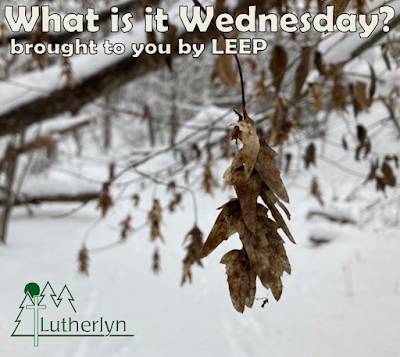
Can you identify what's in this photo?


Each Wednesday morning 

on Camp Lutherlyn's Facebook page

 the Lutherlyn Environmental Education Program posts a photo. 


Readers have all morning and afternoon 

to make their best guess about what the photo is. 


Around 6 pm LEEP provides the answer and a brief explanation.


Each week's What is it Wednesday post 

will also be posted on the Nature of Lutherlyn blog, 

 after it is posted on Facebook,

sometimes with additional bonus information. 


In addition to bringing you current editions of What is it Wednesday 

on the Nature of Lutherlyn blog, 

we will be reposting old editions,

creating a What is it Wednesday archive. 


This photo was posted as a What is it Wednesday on

January 19, 2022. 


And the answer is....


 These are the empty seed capsules of a hop hornbeam tree.

They may look like leaf clusters but they are not. These are the protective sheathing that covered the seeds of the hop hornbeam. The papery sheath has dried up and opened and the seeds have fallen out onto the forest floor, and this is what is left behind. This was the female flower of the hop hornbeam tree.

Hop hornbeam is a small understory tree (about 25-40 feet tall) with soft flaky bark. It is named for its female flowers, which look like the flowers of hop vines used in brewing beer. Like the similar but smooth-barked American hornbeam (also known as musclewood or ironwood) hop hornbeam has strong wood that was often used as tool handles in the past. In fact, both hornbeams are sometimes referred to as ironwood because they both have very strong, dense wood.

Some of the smaller details in the forest are more visible now that we have a thick coating of snow – these seed capsules are a good example, often they are less noticeable against a background of many types of dead leaves. What will you notice if you go out in the forest in the snow? 

Like and follow Camp Lutherlyn on Facebook, to see What is it Wednesday posts when they come out and have the opportunity to share your guesses in the comments!

Wednesday, December 22, 2021

What is it Wednesday: December 15, 2021


Can you identify what's in this photo?


Each Wednesday morning 

on Camp Lutherlyn's Facebook page

 the Lutherlyn Environmental Education Program posts a photo. 


Readers have all morning and afternoon 

to make their best guess about what the photo is. 


Around 6 pm LEEP provides the answer and a brief explanation.


Each week's What is it Wednesday post 

will also be posted on the Nature of Lutherlyn blog, 

 after it is posted on Facebook,

sometimes with additional bonus information. 


In addition to bringing you current editions of What is it Wednesday 

on the Nature of Lutherlyn blog, 

we will be reposting old editions,

creating a What is it Wednesday archive. 


This photo was posted as a What is it Wednesday on

December 15, 2021. 


And the answer is....


 These are the burrs  of common cocklebur. 

Inside the burrs are seeds, waiting to be dispersed by whatever person or critter unwittingly carries the burrs with them when they get caught on their clothing or fur. The burrs of cocklebur are similar to that of burdock, but are football shaped instead of round, and are a bit smaller. Also, burdock plants grow to about 4 ft tall, while cockleburs are about one to two feet tall.

Cockelburs are a short-day plant – they can only flower when there are enough hours of darkness. With enough time in the dark, a chemical process takes place in the leaves which releases a chemical that   triggers flowers to bloom. In Pennsylvania, they generally flower in late summer and early fall.

Even though most plants are not blooming now, and deciduous trees have dropped their leaves and annual plants have died back for the winter, there are still interesting parts of plants to be found in nature this time of year – like these burrs. Keep an eye out and see what you can learn about what plants are up to when the nights are long and temperatures are cold. 

Like and follow Camp Lutherlyn on Facebook, to see What is it Wednesday posts when they come out and have the opportunity to share your guesses in the comments!


Thursday, May 13, 2021

What is it Wednesday: May 12, 2021


This was our first ever What is it Wednesday video!

Can you identify what's in this video?


Each Wednesday morning 

on Camp Lutherlyn's Facebook page

 the Lutherlyn Environmental Education Program posts a photo/video. 


Readers have all morning and afternoon 

to make their best guess about what the photo/video is. 


Around 6 pm LEEP provides the answer and a brief explanation.


Each week's What is it Wednesday post 

will also be posted on the Nature of Lutherlyn blog, 

 after it is posted on Facebook,

sometimes with additional bonus information. 


In addition to bringing you current editions of What is it Wednesday 

on the Nature of Lutherlyn blog, 

we will be reposting old editions,

creating a What is it Wednesday archive. 


This video was posted as a What is it Wednesday on

May 12, 2021. 


And the answer is....


What looks like snow falling in this video is actually the seeds of aspen trees!

After aspens flower, the female catkins produce tiny seeds that are blown into the air by the wind, much like dandelion fluff. Aspens are prolific, and often many many seeds release and travel at the same time, causing a buildup of aspen “fluff” in the air and on the ground near the trees. This type of seed promotes the spread of aspens, by causing the seeds to travel away from their mother trees. This is one of the reasons aspen is such a successful pioneer species, growing well in newly disturbed open soil.  Aspens also reproduce by sending out shoots from their roots, sometimes creating large stands of interconnected trees that are actually one organism!

Aspens are one of the very first trees to blossom in the early spring, around the same time of red maples blossoming, in late March and early April. Like the maples, aspens produce their flowers before they produce their leaves. We are also seeing lots of red maple seeds on the ground right now – maybe there was also a moment when it looked dramatic with a lot of maple seeds winging to the ground at the same time, but we didn’t happen to see that one!

Have you ever seen something in nature that looked like snow but was something else? Make sure you keep an eye out for beauty raining down around you out in nature! 


Like and follow Camp Lutherlyn on Facebook, to see What is it Wednesday posts when they come out and have the opportunity to share your guesses in the comments!

Thursday, January 21, 2021

What is it Wednesday: January 20, 2021


Can you identify what's in this photo?


Each Wednesday morning 

on Camp Lutherlyn's Facebook page

 the Lutherlyn Environmental Education Program posts a photo. 


Readers have all morning and afternoon 

to make their best guess about what the photo is. 


Around 6 pm LEEP provides the answer and a brief explanation.


Each week's What is it Wednesday post 

will also be posted on the Nature of Lutherlyn blog, 

 after it is posted on Facebook,

sometimes with additional bonus information. 


In addition to bringing you current editions of What is it Wednesday 

on the Nature of Lutherlyn blog, 

we will be reposting old editions,

creating a What is it Wednesday archive. 


This photo was posted as a What is it Wednesday on

January 20, 2021. 


And the answer is....


This is a closeup of cattails. 


The “fluff” of cattails is packed into the brown cylinders on top of the stalks, and is released by the wind. Like the fluff of dandelions, the fluff of cattails is its seeds, being dispersed by the wind.

Cattails grow in wetland areas and along the edges of ponds and lakes, and in addition to spreading by their numerous wind-blown seeds, they also spread by rhizomes (horizontal root-like underground stalks), creating large interconnected stands.

Cattails are remarkable plants. The hollow spongy tissues in the stalks and leaves (called aerenchyma) transfer oxygen to the parts of the plants submerged in water. The young shoots, rhizomes, green flower spikes, and pollen can be eaten, and the leaves woven into mats, baskets, and other objects. They provide food for wetland animals, including muskrats. Cattails are excellent at filtering pollution out of the water they grow in – they are used in mine drainage treatment wetlands at abandoned coal mines, including the one at Lutherlyn.  (Plants growing in polluted water do accumulate the pollutants in the fibers of the plant, and should not be eaten). And they have a striking beauty on a winter day against a blue sky. 


Like and follow Camp Lutherlyn on Facebook, to see What is it Wednesday posts when they come out and have the opportunity to share your guesses in the comments!


Thursday, December 10, 2020

What is it Wednesday: December 9, 2020


Can you identify what's in this photo?


Each Wednesday morning 

on Camp Lutherlyn's Facebook page

 the Lutherlyn Environmental Education Program posts a photo. 


Readers have all morning and afternoon 

to make their best guess about what the photo is. 


Around 6 pm LEEP provides the answer and a brief explanation.


Each week's What is it Wednesday post 

will also be posted on the Nature of Lutherlyn blog, 

 after it is posted on Facebook,

sometimes with additional bonus information. 


In addition to bringing you current editions of What is it Wednesday 

on the Nature of Lutherlyn blog, 

we will be reposting old editions,

creating a What is it Wednesday archive. 


This photo was posted as a What is it Wednesday on

December 9, 2020. 


And the answer is....


These are the seeds of a shrub called Carolina allspice. 

Carolina allspice is native to southeastern North America, so we are a little north of its natural range. But part of Lutherlyn’s property used to be part of Eisler Nurseries – in those areas it is not uncommon to run into unusual plants in the forest, that were planted years ago as part of the nursery. This is one of those plants.

Carolina allspice is a dense shrub that grows to about 6-9 feet tall with dark green oval leaves. Its flowers  with narrow dark-burgundy petals blooms in June. (maybe a future What is it Wednesday feature!) 

Late in the summer, seedpods form and remain on the twigs throughout the winter. Breaking open the seedpods reveal the large brown seeds inside. 


While the seeds, leaves, flowers and twigs are all fragrant, many parts of the plants are toxic, especially in large amounts.  However the bark has been dried, ground, and used as a cinnamon-like spice. It was more common for the twigs and leaves to be used as an air freshener and pieces were even tucked into clothing as a perfume. 

Carolina allspice makes a nice native garden shrub. It is low-maintenance and tolerates many types of conditions, and the leaves, flowers, branching pattern, and seedpods are all attractive.

Like and follow Camp Lutherlyn on Facebook, to see What is it Wednesday posts when they come out and have the opportunity to share your guesses in the comments!


Wednesday, July 22, 2020

What is it Wednesday: July 22, 2020


Can you identify what's in this photo?


Each Wednesday morning 
on Camp Lutherlyn's Facebook page
 the Lutherlyn Environmental Education Program posts a photo. 


Readers have all morning and afternoon 
to make their best guess about what the photo is. 

Around 6 pm LEEP provides the answer and a brief explanation.


Each week's What is it Wednesday post 
will also be posted on the Nature of Lutherlyn blog, 
 after it is posted on Facebook,
sometimes with additional bonus information. 

In addition to bringing you current editions of What is it Wednesday 
on the Nature of Lutherlyn blog, 
we will be reposting old editions,
creating a What is it Wednesday archive. 

This photo was posted as a What is it Wednesday on
July 22, 2020. 


And the answer is....


This is the seedpod of a cucumber magnolia tree. This seedpod fell to the ground before it was fully mature.


Cucumber magnolias are large deciduous trees, with a straight broad trunk and large oval smooth-edged  leaves. In the spring, large yellow-green flowers with long oval petals develop on the ends of the twigs, usually high in the canopy. We often see the fallen petals of these flowers on trails in the forest in the spring. 

After the flowers, a seedpod develops. When it is new and unripe, it looks a bit like a small cucumber, giving the tree its name. As the seedpods ripen they turn reddish – they sometimes fall from the trees before they fully develop, like the one in this picture. When they are “ripe” the pods open and release oval-shaped bright red seeds, which we also find often on the forest floor, in the fall.

It is interesting that although both seedpods and flowers originate high up in the canopy, we encounter them often on the forest floor below – right now in mid-July there are lots of these partially developed seedpods on the trails.

For a longer look at nature with our LEEP staff, check out our virtual summer camp videos! Each day of day camp, junior camp, and junior high/senior high camp has a nature video and a Terra Dei video to help you learn more about God’s amazing creation. Find them here: https://www.lutherlyn.com/summercamp/2020-virtual-summer-camp.html.   And like and follow Camp Lutherlyn on Facebook, to see What is it Wednesday posts when they come out and have the opportunity to share your guesses in the comments!

Wednesday, April 8, 2020

What is it Wednesday: April 8, 2020


Can you identify what's in this photo?


Each Wednesday morning 
on Camp Lutherlyn's Facebook page
 the Lutherlyn Environmental Education Program posts a photo. 


Readers have all morning and afternoon 
to make their best guess about what the photo is. 

Around 6 pm LEEP provides the answer and a brief explanation.


Each week's What is it Wednesday post 
will also be posted on the Nature of Lutherlyn blog, 
 after it is posted on Facebook,
sometimes with additional bonus information. 

In addition to bringing you current editions of What is it Wednesday 
on the Nature of Lutherlyn blog, 
we will be reposting old editions,
creating a What is it Wednesday archive. 

This photo was posted as a What is it Wednesday on
April 8, 2020. 


And the answer is....


 These are seeds of Norway spruce trees. (Actually the seed on the left has fallen out, leaving only the papery “wing” behind.)


They may look a bit similar to the “helicopter” seeds of maple trees, but they are about half the size of the smallest maple seeds we see in Pennsylvania, are arranged singly and not in pairs, and it is too early in the spring to see maple seeds. (These seeds were found Monday, April 6.)

We don’t usually see the seeds of evergreens, because they are usually tucked safely inside the cones of the tree. The large visible woody cone is the female cone where the seeds develop. The seeds are nestled against the inside of the woody scales of the cones. The male cones are smaller and softer, and carry and release the pollen that fertilizes the female cones to produce the seeds.

Seeds and female cones from Norway spruce. The cone on the left has opened almost fully.
The cone on the right is still closed tight near the base.

Most cones of trees found in Pennsylvania open when they become dried out, allowing the small seeds to fall out and disperse by the wind. Usually by the time the cones fall to the ground, the seeds are long gone, perhaps tucked into the soil eventually to become a tree. 

Sometimes animals get to the seeds before they have a chance to disperse! In the spruce forests around Lutherlyn, we often find cones on the ground that look like already-eaten corn on the cob: 


These are what is left behind after red squirrels have peeled the scales off the cone in order to eat the seeds tucked inside. Left-behind remnants of eaten food are known as "middens" and can be interesting clues to what animals have been around in the area recently. Maybe if you keep an eye out you will also find some spruce seeds or middens in your own outings in nature. 


Like and follow Camp Lutherlyn on Facebook, to see What is it Wednesday posts when they come out and have the opportunity to share your guesses in the comments!

Thursday, February 6, 2020

What is it Wednesday: February 5, 2020


Can you identify what's in this photo?


Each Wednesday morning 
on Camp Lutherlyn's Facebook page
 the Lutherlyn Environmental Education Program posts a photo. 


Readers have all morning and afternoon 
to make their best guess about what the photo is. 

Around 6 pm LEEP provides the answer and a brief explanation.


Each week's What is it Wednesday post 
will also be posted on the Nature of Lutherlyn blog, 
 after it is posted on Facebook,
sometimes with additional bonus information. 

In addition to bringing you current editions of What is it Wednesday 
on the Nature of Lutherlyn blog, 
we will be reposting old editions,
creating a What is it Wednesday archive. 

This photo was posted as a What is it Wednesday on
February 5, 2020. 


And the answer is....


These are the seed bracts of an American hornbeam tree. 

The seeds of American hornbeam grow in tight clusters, with small nutlets protected by small overlapping umbrella-like leaflets, called bracts. These bracts are sometimes still visible in clusters hanging from the ends of branches late into the winter, even though the seeds have long since dispersed.

American hornbeam is a tree that does not grow very tall or wide, but its wood is very dense and strong, with smooth gray bark showing ripples of the wood underneath. It is a common understory tree at Lutherlyn and in western Pennsylvania, often called musclewood for its appearance or ironwood for its strength. 

It is distinct from hop hornbeam, another small sturdy understory tree in our area. Hop hornbeam has shaggier bark and its seed bracts are rounded, making the seed clusters look a lot like the hops used to flavor beer.


For more on how LEEP can help you get to know the trees and other residents of our forests, through school field trips, summer camp, Saturday safaris, and more, check out www.lutherlyn.com/ee


Like and follow Camp Lutherlyn on Facebook, to see What is it Wednesday posts when they come out and have the opportunity to share your guesses in the comments!

Monday, January 6, 2020

What is it Wednesday archive: December 18, 2019


Can you identify what's in this photo?


Each Wednesday morning 
on Camp Lutherlyn's Facebook page
 the Lutherlyn Environmental Education Program posts a photo. 


Readers have all morning and afternoon 
to make their best guess about what the photo is. 

Around 6 pm LEEP provides the answer and a brief explanation.


Each week's What is it Wednesday post 
will also be posted on the Nature of Lutherlyn blog, 
 after it is posted on Facebook,
sometimes with additional bonus information. 

In addition to bringing you current editions of What is it Wednesday 
on the Nature of Lutherlyn blog, 
we will be reposting old editions,
creating a What is it Wednesday archive. 

This photo was posted as a What is it Wednesday on
December 18, 2019


And the answer is....


This is the burr of the burdock plant. 

Burrs are seed pods which have tiny “hooks” that allow them to cling to animals and people that brush against them while passing by. By hitching a ride on passersby, the seeds get dispersed further away from the parent plant, allowing the plant to spread and survive in more places. Clever!


Burdock’s burrs have relatively large and visible hooks, which make them a nightmare for getting out of clothing, hair, and fur, but very effective at spreading their seeds. They were also the inspiration for the creation of velcro hook-and-loop closures – compare the two sometime! Nature’s clever designs often become inspiration for clever human designs.

For more on how LEEP can help you learn about the clever designs in nature and their functions, through school field trips, summer camp, Saturday safaris, and more, check out www.Lutherlyn.com/ee.


Like and follow Camp Lutherlyn on Facebook, to see What is it Wednesday posts when they come out and have the opportunity to share your guesses in the comments!