Showing posts with label wildflowers. Show all posts

Tuesday, September 14, 2021

What is it Wednesday: September 8, 2021


Can you identify what's in this photo?


Each Wednesday morning 

on Camp Lutherlyn's Facebook page

 the Lutherlyn Environmental Education Program posts a photo. 


Readers have all morning and afternoon 

to make their best guess about what the photo is. 


Around 6 pm LEEP provides the answer and a brief explanation.


Each week's What is it Wednesday post 

will also be posted on the Nature of Lutherlyn blog, 

 after it is posted on Facebook,

sometimes with additional bonus information. 


In addition to bringing you current editions of What is it Wednesday 

on the Nature of Lutherlyn blog, 

we will be reposting old editions,

creating a What is it Wednesday archive. 


This photo was posted as a What is it Wednesday on

September 8, 2021. 


And the answer is....


 These are pokeberries.

The plant they grow on is known as poke, pokeweed, or pokeberry, and can grow up to 12 feet tall each year. The dark purple berries, although attractive, are poisonous to humans. (At LEEP we enjoy teaching people about wild plants that can be eaten, but it is just as important to know which ones you should NOT eat!) The berries are, however, an important food source for many animals, especially birds. The berries can also be used to make dye and ink.

For more on how LEEP can help you learn about the world around us, and for other ways you can visit and experience the nature of Lutherlyn in person, check out www.Lutherlyn.com.

Like and follow Camp Lutherlyn on Facebook, to see What is it Wednesday posts when they come out and have the opportunity to share your guesses in the comments!


Thursday, August 26, 2021

What is it Wednesday: August 25, 2021


Can you identify what's in this photo?


Each Wednesday morning 

on Camp Lutherlyn's Facebook page

 the Lutherlyn Environmental Education Program posts a photo. 


Readers have all morning and afternoon 

to make their best guess about what the photo is. 


Around 6 pm LEEP provides the answer and a brief explanation.


Each week's What is it Wednesday post 

will also be posted on the Nature of Lutherlyn blog, 

 after it is posted on Facebook,

sometimes with additional bonus information. 


In addition to bringing you current editions of What is it Wednesday 

on the Nature of Lutherlyn blog, 

we will be reposting old editions,

creating a What is it Wednesday archive. 


This photo was posted as a What is it Wednesday on

August 25, 2021. 


And the answer is....


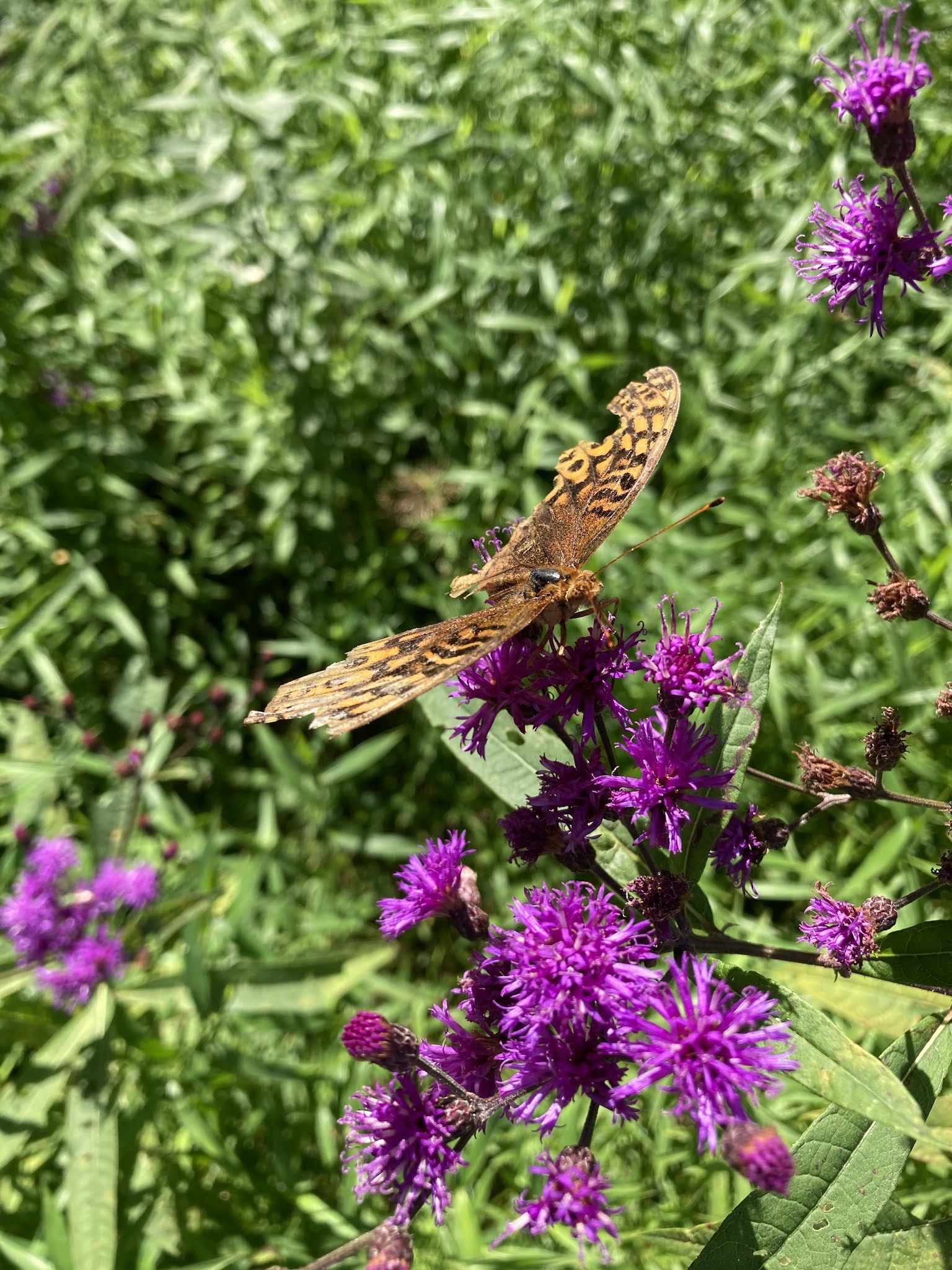
These are the flowers of ironweed, a meadow wildflower that grows up to 8 feet tall.

The name refers to the toughness of its stem, and it is a member of the aster family. Butterflies, bees, and other pollinators love it. Their intense purple color is striking, and looks especially pretty in a field mixed with goldenrod, which also blooms in late summer.

Author Robin Wall Kimmerer, a botanist and a member of the Citizen Potawatomi Nation, has a beautiful and insightful reflection on the connection between asters and goldenrod, purple and yellow, in her book Braiding Sweetgrass: Indigenous Wisdom, Scientific Knowledge and the Teachings of Plants. She points out that purple and yellow are reciprocal colors, perceived by the same receptors in the eye. This is true for both the eyes of humans and the eyes of bees. 

"This doesn’t explain why I perceive them as beautiful, but it does explain why that combination gets my undivided attention. I asked my artist friends about the power of purple and gold, and they sent me right to the color wheel: these two are complementary colors, as different in nature as could be. In composing a palette, putting them together makes each more vivid; just a touch of one will bring out the other. Purple and yellow are a reciprocal pair.


"The real beholder whose eye they hope to catch is a bee bent on pollination. As it turns out, golden rod and asters appear very similarly to bee eyes and human eyes. Their striking contrast when they grow together makes them the most attractive target in the whole meadow. Growing together, both receive more pollinator visits than they would if they were growing alone."


"It’s a testable hypothesis; it’s a question of science, a question of art, and a question of beauty. Why are they beautiful together? It is a phenomenon simultaneously material and spiritual, for which we need all wavelengths of knowledge.

… its wisdom is that the beauty of one is illuminated by the radiance of the other. Science and art, matter and spirit, indigenous knowledge and Western science— can they be goldenrod and asters for each other?"


For a full excerpt of the essay, go to https://commons.bluemountaincenter.org/goldenrod-and-asters-my-life-with-plants/ . 

And for more on how you can visit Lutherlyn to engage both the material and the spiritual, visit www.Lutherlyn.com . 


Like and follow Camp Lutherlyn on Facebook, to see What is it Wednesday posts when they come out and have the opportunity to share your guesses in the comments!


Thursday, April 29, 2021

What is it Wednesday: April 28, 2021


Can you identify what's in this photo?


Each Wednesday morning 

on Camp Lutherlyn's Facebook page

 the Lutherlyn Environmental Education Program posts a photo. 


Readers have all morning and afternoon 

to make their best guess about what the photo is. 


Around 6 pm LEEP provides the answer and a brief explanation.


Each week's What is it Wednesday post 

will also be posted on the Nature of Lutherlyn blog, 

 after it is posted on Facebook,

sometimes with additional bonus information. 


In addition to bringing you current editions of What is it Wednesday 

on the Nature of Lutherlyn blog, 

we will be reposting old editions,

creating a What is it Wednesday archive. 


This photo was posted as a What is it Wednesday on

April 28, 2021. 


And the answer is....


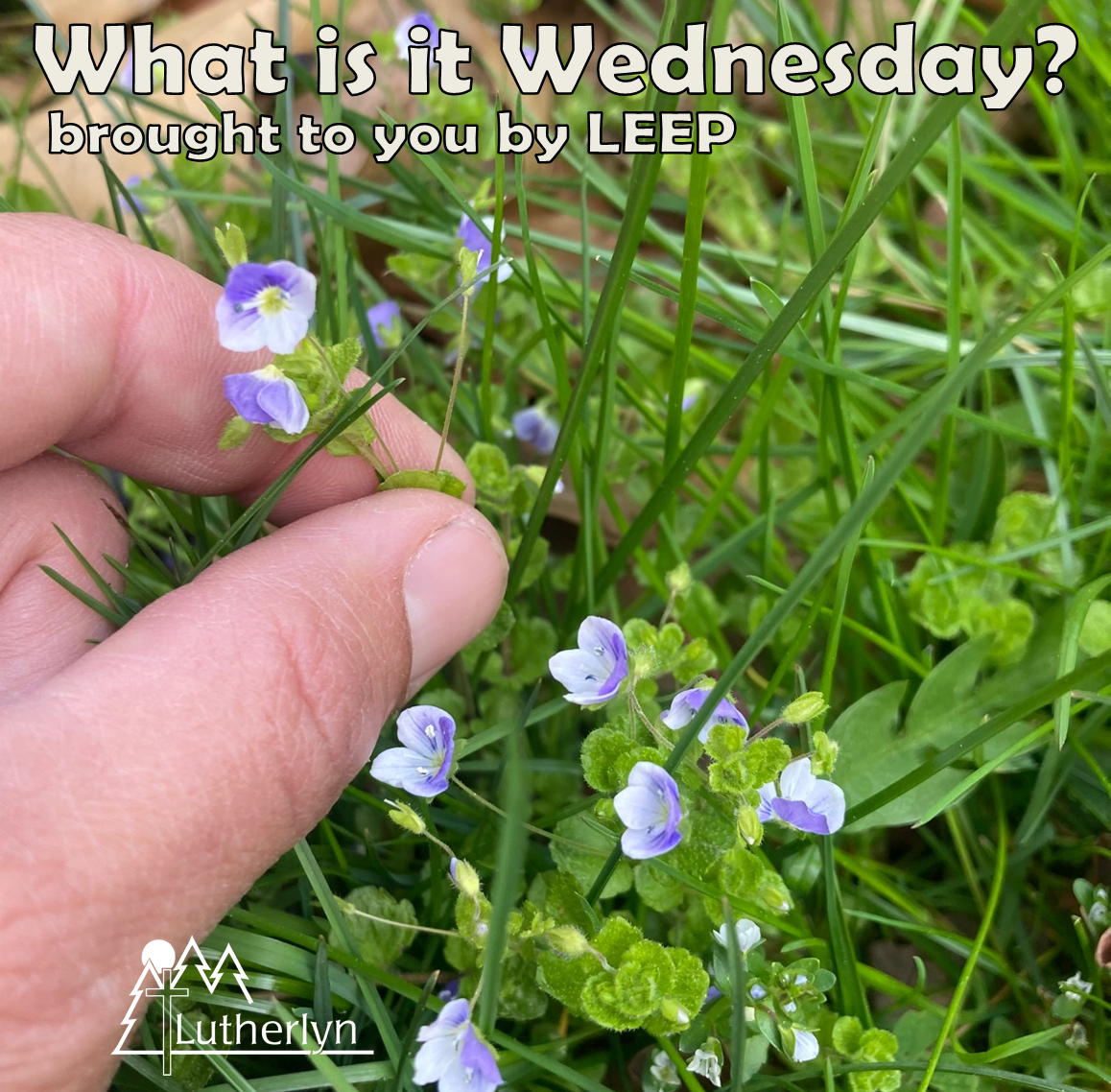
This tiny wildflower is Veronica persica. It also goes by many common names, including bird’s-eye speedwell, Persian speedwell, and common, field, and winter speedwell.

There are many varieties of speedwell, some wild and some cultivated. The main differences between varieties are in the shapes of the leaves, with also some variation in color and minor variations in shape of petals. This variety has one lower smaller petal that is nearly all white, two side petals that are half white and half streaked with purple, and and upper petal that is nearly all streaked with purple. As the common name Persian suggests, this variety is not native to our area and is originally from Eurasia, but it has become widely naturalized, especially in yards. There is a speedwell native to North America – American speedwell.

Speedwell tends to bloom early in spring, and we see it most when it is present in yards around camp before we begin mowing! I’m not sure if we see it so briefly because it doesn’t bloom for long, or if it gets cut shortly after it blooms. Either way, it is lovely to enjoy this little carpet of blue and white while it is here.

Like and follow Camp Lutherlyn on Facebook, to see What is it Wednesday posts when they come out and have the opportunity to share your guesses in the comments!


Friday, April 16, 2021

What is it Wednesday: April 14, 2021


Can you identify what's in this photo?


Each Wednesday morning 

on Camp Lutherlyn's Facebook page

 the Lutherlyn Environmental Education Program posts a photo. 


Readers have all morning and afternoon 

to make their best guess about what the photo is. 


Around 6 pm LEEP provides the answer and a brief explanation.


Each week's What is it Wednesday post 

will also be posted on the Nature of Lutherlyn blog, 

 after it is posted on Facebook,

sometimes with additional bonus information. 


In addition to bringing you current editions of What is it Wednesday 

on the Nature of Lutherlyn blog, 

we will be reposting old editions,

creating a What is it Wednesday archive. 


This photo was posted as a What is it Wednesday on

April 14, 2021. 


And the answer is....


These are flowers of the serviceberry tree. 

Serviceberry is a small tree native to Pennsylvania forests. It gets pretty white flowers in the spring, sweet red edible berries in early summer, and its leaves turn a colorful yellow-orange in the fall.

This time of year there are many colorful flowering trees to catch the eye! In addition to serviceberry, redbud, dogwood, and various types of cherries are exceptionally pretty flowering trees that are native to Pennsylvania. (All trees flower in one way or another, but not all of them have showy or attractive flowers.) Choosing native trees and other plants in landscaping helps support local ecosystems by providing food for pollinators and preventing invasive species from spreading.

Like and follow Camp Lutherlyn on Facebook, to see What is it Wednesday posts when they come out and have the opportunity to share your guesses in the comments!

Thursday, April 8, 2021

What is it Wednesday: April 7, 2021


Can you identify what's in this photo?


Each Wednesday morning 

on Camp Lutherlyn's Facebook page

 the Lutherlyn Environmental Education Program posts a photo. 


Readers have all morning and afternoon 

to make their best guess about what the photo is. 


Around 6 pm LEEP provides the answer and a brief explanation.


Each week's What is it Wednesday post 

will also be posted on the Nature of Lutherlyn blog, 

 after it is posted on Facebook,

sometimes with additional bonus information. 


In addition to bringing you current editions of What is it Wednesday 

on the Nature of Lutherlyn blog, 

we will be reposting old editions,

creating a What is it Wednesday archive. 


This photo was posted as a What is it Wednesday on

April 7, 2021. 


And the answer is....


These pretty spring wildflowers are called bluets. 

We haven’t seen any bluets yet at Lutherlyn this year, this is a photo from a previous year – so far we have seen coltsfoot and dandelions, and the spring beauties and bluets should be coming out soon.

These early delicate spring wildflowers are sometimes known as spring ephemerals. They bloom briefly early in the spring, taking advantage of the time when lots of sunlight reaches the ground because there are no (or only very small) leaves on the trees. Late April and early May are a great time to see spring ephemerals.

Like and follow Camp Lutherlyn on Facebook, to see What is it Wednesday posts when they come out and have the opportunity to share your guesses in the comments!


Monday, November 9, 2020

What is it Wednesday: November 4, 2020


Can you identify what's in this photo?


Each Wednesday morning 

on Camp Lutherlyn's Facebook page

 the Lutherlyn Environmental Education Program posts a photo. 


Readers have all morning and afternoon 

to make their best guess about what the photo is. 


Around 6 pm LEEP provides the answer and a brief explanation.


Each week's What is it Wednesday post 

will also be posted on the Nature of Lutherlyn blog, 

 after it is posted on Facebook,

sometimes with additional bonus information. 


In addition to bringing you current editions of What is it Wednesday 

on the Nature of Lutherlyn blog, 

we will be reposting old editions,

creating a What is it Wednesday archive. 


This photo was posted as a What is it Wednesday on

November 4, 2020. 


And the answer is....


 This is a wildflower called tansy. 

It is a non-native import from Europe, and does have invasive tendencies, but also has many positive impacts and uses. Honeybees are attracted to it, but many other insects are repelled by it, making it a helpful companion plant for pest control in gardens. (Just be aware that once you have it you will most likely never fully get rid of it!) Although it contains toxic compounds, historically it has been used as a remedy for intestinal worms and other ailments, as a sage-like flavoring, placed throughout homes and near stored food to keep insects and worms away, and even in pre-embalming burial practices. The bright yellow flowers have a strong sweet camphor-like smell.

This picture was taken in early November -- tansy is still currently blooming and growing, even after several frosts. It is not an evergreen but a cold-hardy perennial. The flower stalks and leaves will die back later in the fall and early winter, then regrow from the same root system next year. Although most trees have dropped their leaves, there are some plants still green and growing. Look around – what is still green and growing near you? Is it an evergreen or something that will die down in the next month or two?

Like and follow Camp Lutherlyn on Facebook, to see What is it Wednesday posts when they come out and have the opportunity to share your guesses in the comments!

Wednesday, September 30, 2020

What is it Wednesday: September 30, 2020


Can you identify what's in this photo?


Each Wednesday morning 

on Camp Lutherlyn's Facebook page

 the Lutherlyn Environmental Education Program posts a photo. 


Readers have all morning and afternoon 

to make their best guess about what the photo is. 


Around 6 pm LEEP provides the answer and a brief explanation.


Each week's What is it Wednesday post 

will also be posted on the Nature of Lutherlyn blog, 

 after it is posted on Facebook,

sometimes with additional bonus information. 


In addition to bringing you current editions of What is it Wednesday 

on the Nature of Lutherlyn blog, 

we will be reposting old editions,

creating a What is it Wednesday archive. 


This photo was posted as a What is it Wednesday on

September 30, 2020. 


And the answer is....


 This pretty little wildflower is called nodding lady’s tresses. 

It is a small member of the orchid family, often found near roadsides and the edges of ponds. It was spotted near the settling pond of the passive treatment system for abandoned mine drainage on Lutherlyn’s property.


Even in an area being remediated because of pollution, beauty finds ways to shine through. Spotting fall wildflowers also feels like a special treat, as fall frosts begin and soon there will be very few plants blooming. Get outsides and soak up all the fall beauty you can, from wildflowers, to weird mushrooms, to colorful leaves. 

Like and follow Camp Lutherlyn on Facebook, to see What is it Wednesday posts when they come out and have the opportunity to share your guesses in the comments!


Monday, September 7, 2020

What is it Wednesday archive: September 5, 2019


Can you identify what's in this photo?


Each Wednesday morning 

on Camp Lutherlyn's Facebook page

 the Lutherlyn Environmental Education Program posts a photo. 


Readers have all morning and afternoon 

to make their best guess about what the photo is. 


Around 6 pm LEEP provides the answer and a brief explanation.


Each week's What is it Wednesday post 

will also be posted on the Nature of Lutherlyn blog, 

 after it is posted on Facebook,

sometimes with additional bonus information. 


In addition to bringing you current editions of What is it Wednesday 

on the Nature of Lutherlyn blog, 

we will be reposting old editions,

creating a What is it Wednesday archive. 


This photo was posted as a What is it Wednesday on

September 5, 2019. 


And the answer is....


This beautiful wildflower is mullein. 

People frequently asked “what is this?!” when seeing it at Terra Dei this summer. Its tall stalks, bright flowers, and soft fuzzy leaves make it a very striking sight. 

Pioneers and Native Americans used the leaves in an herbal tea, and the dried stalks supposedly make a good “drill” in friction fire starting. The leaves were also sometimes used as additional insulation inside shoes and moccasins.

Getting to know the plants growing around us can make us feel more confident, comfortable, and at home in the outdoors – check out how LEEP can help you learn about nature through field trips, Saturday Safaris, summer camp, retreats and other special events at www.lutherlyn.com. And  like and follow Camp Lutherlyn on Facebook, to see What is it Wednesday posts when they come out and have the opportunity to share your guesses in the comments!


Thursday, August 20, 2020

What is it Wednesday: August 19, 2020


Can you identify what's in this photo?


Each Wednesday morning 

on Camp Lutherlyn's Facebook page

 the Lutherlyn Environmental Education Program posts a photo. 


Readers have all morning and afternoon 

to make their best guess about what the photo is. 


Around 6 pm LEEP provides the answer and a brief explanation.


Each week's What is it Wednesday post 

will also be posted on the Nature of Lutherlyn blog, 

 after it is posted on Facebook,

sometimes with additional bonus information. 


In addition to bringing you current editions of What is it Wednesday 

on the Nature of Lutherlyn blog, 

we will be reposting old editions,

creating a What is it Wednesday archive. 


This photo was posted as a What is it Wednesday on

August 19, 2020. 


And the answer is....


This pretty pink plant growing at Miller Lake at Lutherlyn
(formerly known as Upper Lake)
is called steeplebush. 

It often grows in wetlands and along the edges  of ponds throughout eastern North America. It is actually a small shrub, but the stems often die back after the growing season each year. We see its pretty pink blossoms towards the end of summer. 

What other wildflowers do you look for at the end of the summer? 

Like and follow Camp Lutherlyn on Facebook, to see What is it Wednesday posts when they come out and have the opportunity to share your guesses in the comments!