Wednesday, November 25, 2020

What is it Wednesday: November 25, 2020


Can you identify what's in this photo?


Each Wednesday morning 

on Camp Lutherlyn's Facebook page

 the Lutherlyn Environmental Education Program posts a photo. 


Readers have all morning and afternoon 

to make their best guess about what the photo is. 


Around 6 pm LEEP provides the answer and a brief explanation.


Each week's What is it Wednesday post 

will also be posted on the Nature of Lutherlyn blog, 

 after it is posted on Facebook,

sometimes with additional bonus information. 


In addition to bringing you current editions of What is it Wednesday 

on the Nature of Lutherlyn blog, 

we will be reposting old editions,

creating a What is it Wednesday archive. 


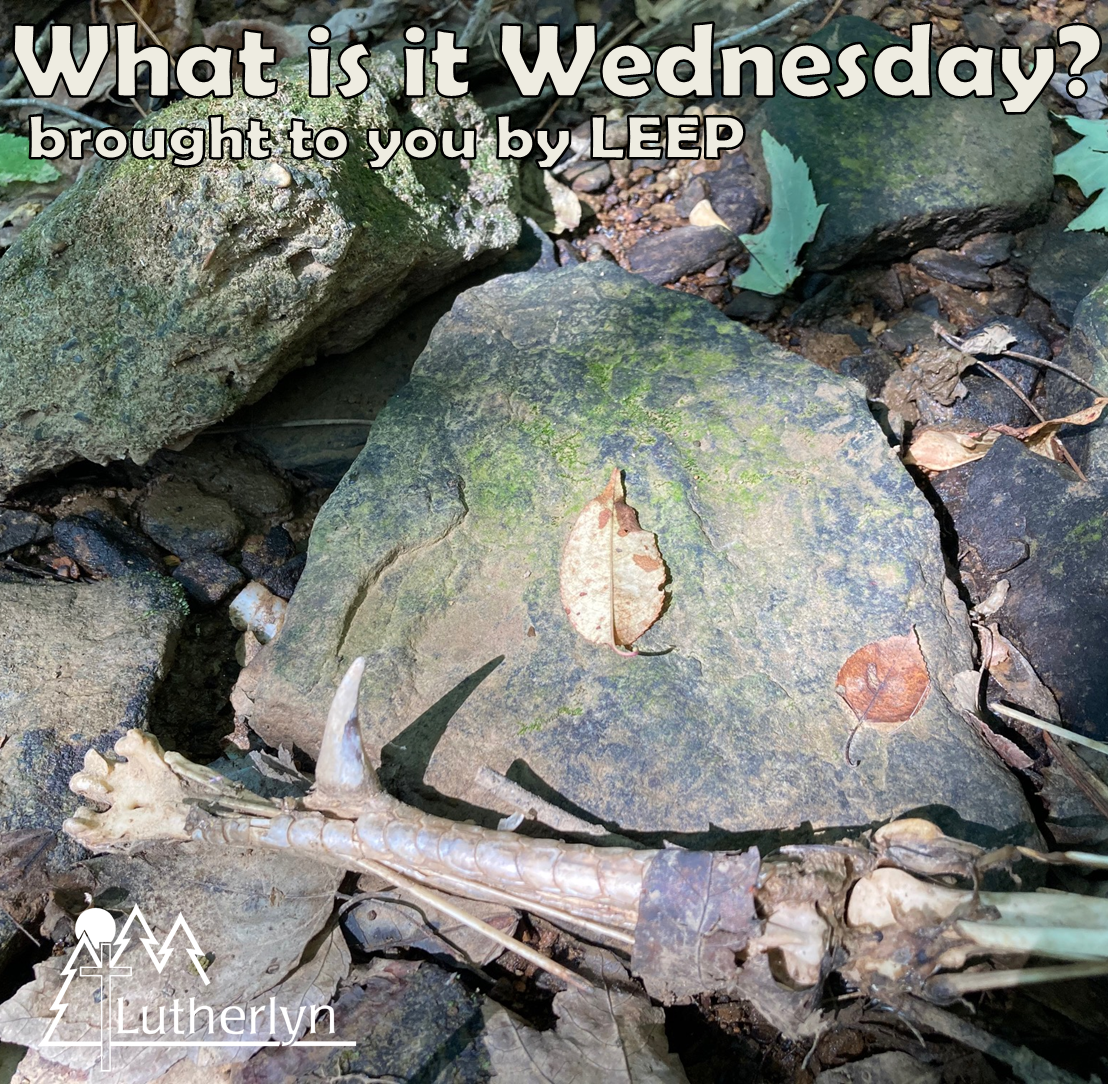
This photo was posted as a What is it Wednesday on

November 25, 2020. 


And the answer is....


 These bones are part of the skeleton of a wild turkey. 


The curved part sticking up is known as the spur, and tells us that this was a male turkey. The size and shape of a spur can also help determine the probable age of the turkey – this one has a slight curve, and is pointed but not sharp. Spurs that are shaped like this and are about 1 to 1.5 inches are usually found on turkeys 2 to 3 years old. (This spur wasn’t measured but looks like it’s probably within that size range.)

The spur is actually on the foot bone of the turkey, though it appears to us like it is on the lower leg. 


from:  https://sandyscottblog.blogspot.com/2013/04/414-in-studio-bird-anatomy-cont.html?m=0


The joints at the left end of the bone in the initial picture would connect to the toe bones. The joint towards the right side of the bones is actually the ankle – the next bone to the right is the lower leg bone (or drumstick). Above that would be the knee, then the thigh and hip. 

Whether  you will be enjoying turkey this Thanksgiving or not, and whether you are able to celebrate with those you wish to see or not, we wish you a Happy Thanksgiving. We are thankful for all of you! 


Like and follow Camp Lutherlyn on Facebook, to see What is it Wednesday posts when they come out and have the opportunity to share your guesses in the comments!


Monday, November 23, 2020

What is it Wednesday archive: November 27, 2019


Can you identify what's in this photo?


Each Wednesday morning 
on Camp Lutherlyn's Facebook page
 the Lutherlyn Environmental Education Program posts a photo. 


Readers have all morning and afternoon 
to make their best guess about what the photo is. 

Around 6 pm LEEP provides the answer and a brief explanation.


Each week's What is it Wednesday post 
will also be posted on the Nature of Lutherlyn blog, 
 after it is posted on Facebook,
sometimes with additional bonus information. 

In addition to bringing you current editions of What is it Wednesday 
on the Nature of Lutherlyn blog, 
we will be reposting old editions,
creating a What is it Wednesday archive. 

This photo was posted as a What is it Wednesday on
November 27, 2019. 

 And the answer is....


This colorful fungus is Trametes versicolor, also known as turkey tail. 

Turkey tail is a polypore bracket fungus that usually grows in layers. It feeds on decaying matter, so is often found on dead logs, as this one was. 


It grows not just in North America but across Europe and Asia as well. It is considered a medicinal mushroom in many places. 


Happy Thanksgiving everyone, we at LEEP are thankful for all of YOU! 


Like and follow Camp Lutherlyn on Facebook, to see What is it Wednesday posts when they come out and have the opportunity to share your guesses in the comments!


Wednesday, November 18, 2020

What is it Wednesday: November 18, 2020


Can you identify what's in this photo?


Each Wednesday morning 

on Camp Lutherlyn's Facebook page

 the Lutherlyn Environmental Education Program posts a photo. 


Readers have all morning and afternoon 

to make their best guess about what the photo is. 


Around 6 pm LEEP provides the answer and a brief explanation.


Each week's What is it Wednesday post 

will also be posted on the Nature of Lutherlyn blog, 

 after it is posted on Facebook,

sometimes with additional bonus information. 


In addition to bringing you current editions of What is it Wednesday 

on the Nature of Lutherlyn blog, 

we will be reposting old editions,

creating a What is it Wednesday archive. 


This photo was posted as a What is it Wednesday on

November 28, 2020. 


And the answer is....


 These are the left behind nests in a bluebird nesting box
at Lutherlyn’s Terra Dei homestead.

Different types of birds create different types of nests, so examining the nests can tell you what kind of birds were nesting in those boxes. This box had two nests in it! It is not unusual for two different kinds of birds to use a nesting box at different times during the nesting season. 

The top nest, which takes up most of the box and is made primarily out of twigs, was probably made by a house wren. 

The nest on the bottom was made out of grasses and finer material and was probably made by either bluebirds or tree swallows. Tree swallows include feathers at the top of the nest, and there were no feathers left behind in this one; but bluebird nests are usually thicker and tree swallow nests thinner, and this one was thinner, so it’s not clear which it was.

If you want to know what kind of bird made a nest in your bluebird box, "What Is In My Bluebird House?" from Ohio State's Buckeye Yard and Garden Online is a great resource:  https://bygl.osu.edu/node/465#:~:text=Bluebird%20houses%20(hereafter%20called%20bluebird,Male%20eastern%20bluebird.

November is a good time of year to clean out nesting boxes, so they are ready to use when birds start nesting again in the spring. These nests were found while we were cleaning out nesting boxes as part of our fall cleanup around Terra Dei homestead.

The Terra Dei nesting boxes are designed to encourage birds who are insectivores to live near the gardens – they help control insects that are garden pests by eating them! We enjoy watching the birds who make their homes around Terra Dei and are grateful for their help in the garden!

Like and follow Camp Lutherlyn on Facebook, to see What is it Wednesday posts when they come out and have the opportunity to share your guesses in the comments!

Tuesday, November 17, 2020

What is it Wednesday: November 11, 2020


 Can you identify what's in this photo?


Each Wednesday morning 

on Camp Lutherlyn's Facebook page

 the Lutherlyn Environmental Education Program posts a photo. 


Readers have all morning and afternoon 

to make their best guess about what the photo is. 


Around 6 pm LEEP provides the answer and a brief explanation.


Each week's What is it Wednesday post 

will also be posted on the Nature of Lutherlyn blog, 

 after it is posted on Facebook,

sometimes with additional bonus information. 


In addition to bringing you current editions of What is it Wednesday 

on the Nature of Lutherlyn blog, 

we will be reposting old editions,

creating a What is it Wednesday archive. 


This photo was posted as a What is it Wednesday on

November 11, 2020. 


And the answer is....


These are the seeds of a wild leek plant. 

Wild leeks are a type of wild onion and are a highly sought after wild edible. In some places they are called ramps. Each plant has a few broad smooth oval leaves, and a slender onion-like bulb underground. 

Leeks are primarily harvested in the spring, but later in the summer they also produce a small ball of tiny purple or white flowers on the end of a stalk - similar to chive flowers. After the flowers bloom, they produce these shiny black seeds. 

From late fall to early winter, many plants are producing seeds to reproduce. It is fascinating to observe the many forms these seeds take in different plants! What kinds of seeds can you find around you this week?  

Like and follow Camp Lutherlyn on Facebook, to see What is it Wednesday posts when they come out and have the opportunity to share your guesses in the comments!

Monday, November 9, 2020

What is it Wednesday: November 4, 2020


Can you identify what's in this photo?


Each Wednesday morning 

on Camp Lutherlyn's Facebook page

 the Lutherlyn Environmental Education Program posts a photo. 


Readers have all morning and afternoon 

to make their best guess about what the photo is. 


Around 6 pm LEEP provides the answer and a brief explanation.


Each week's What is it Wednesday post 

will also be posted on the Nature of Lutherlyn blog, 

 after it is posted on Facebook,

sometimes with additional bonus information. 


In addition to bringing you current editions of What is it Wednesday 

on the Nature of Lutherlyn blog, 

we will be reposting old editions,

creating a What is it Wednesday archive. 


This photo was posted as a What is it Wednesday on

November 4, 2020. 


And the answer is....


 This is a wildflower called tansy. 

It is a non-native import from Europe, and does have invasive tendencies, but also has many positive impacts and uses. Honeybees are attracted to it, but many other insects are repelled by it, making it a helpful companion plant for pest control in gardens. (Just be aware that once you have it you will most likely never fully get rid of it!) Although it contains toxic compounds, historically it has been used as a remedy for intestinal worms and other ailments, as a sage-like flavoring, placed throughout homes and near stored food to keep insects and worms away, and even in pre-embalming burial practices. The bright yellow flowers have a strong sweet camphor-like smell.

This picture was taken in early November -- tansy is still currently blooming and growing, even after several frosts. It is not an evergreen but a cold-hardy perennial. The flower stalks and leaves will die back later in the fall and early winter, then regrow from the same root system next year. Although most trees have dropped their leaves, there are some plants still green and growing. Look around – what is still green and growing near you? Is it an evergreen or something that will die down in the next month or two?

Like and follow Camp Lutherlyn on Facebook, to see What is it Wednesday posts when they come out and have the opportunity to share your guesses in the comments!

Saturday, October 31, 2020

What is it Wednesday archive: October 31, 2018


 Can you identify what's in this photo?


Each Wednesday morning 

on Camp Lutherlyn's Facebook page

 the Lutherlyn Environmental Education Program posts a photo. 


Readers have all morning and afternoon 

to make their best guess about what the photo is. 


Around 6 pm LEEP provides the answer and a brief explanation.


Each week's What is it Wednesday post 

will also be posted on the Nature of Lutherlyn blog, 

 after it is posted on Facebook,

sometimes with additional bonus information. 


In addition to bringing you current editions of What is it Wednesday 

on the Nature of Lutherlyn blog, 

we will be reposting old editions,

creating a What is it Wednesday archive. 


This photo was posted as a What is it Wednesday on

October 31, 2018. 


And the answer is....


 This eerie looking fungus has a spooky name: dead man’s fingers. 

Here it is growing out of a dead log, but it is sometimes found poking up out of soil or leaf litter, perhaps giving the appearance of fingers reaching out of a grave. Spooky! 

There is something dead here, but it’s not fingers. Dead man’s fingers, like most other fungus, lives by consuming the decaying matter of dead wood, which helps the dead sticks, logs, trees and roots in our forests turn into soil to nurture the next generation of plants. 

There are many cases in nature of something looking “scary” to us, and maybe even leading to a superstition, when it is just doing its job. Learning about these things can help us see what we encounter in nature as less scary and more interesting. 

For more on how LEEP can help you can transform the scary into the fascinating through knowledge, check out www.Lutherlyn.com/ee. 

Like and follow Camp Lutherlyn on Facebook, to see What is it Wednesday posts when they come out and have the opportunity to share your guesses in the comments!

Wednesday, October 28, 2020

What is it Wednesday: October 28, 2020


Can you identify what's in this photo?


Each Wednesday morning 

on Camp Lutherlyn's Facebook page

 the Lutherlyn Environmental Education Program posts a photo. 


Readers have all morning and afternoon 

to make their best guess about what the photo is. 


Around 6 pm LEEP provides the answer and a brief explanation.


Each week's What is it Wednesday post 

will also be posted on the Nature of Lutherlyn blog, 

 after it is posted on Facebook,

sometimes with additional bonus information. 


In addition to bringing you current editions of What is it Wednesday 

on the Nature of Lutherlyn blog, 

we will be reposting old editions,

creating a What is it Wednesday archive. 


This photo was posted as a What is it Wednesday on

October 28, 2020. 


And the answer is....


This is a dead moth covered by a cordyceps fungus.

There are over 400 species of cordyceps fungus worldwide, most in Asia, but a handful are found in Pennsylvania. Some grow on the larvae and pupae of insects, and others grow off of other fungi. Some produce visible club mushrooms above the surface of the soil. And some, occasionally, parasitize adult moths like this one.

In conditions with the correct temperature and high humidity, spores from the fungus land on an insect and penetrate its body. As the fungus begins to infest the insect, the insect often moves to a high resting place, like the end of a branch. The fungus then develops further inside the insect and eventually emerges to its surface, completely covering it and killing it. The strands that extend from the surface of the fungus, along with the high resting place of the insect, make it easier for the new spores of the fungus to disperse.

Fungi that function this way are called entomopathogenic -- entomo means having to do with insects and a pathogen is an organism that causes disease or harm to its host. Some types of entomopathogenic  cordyceps fungi that control their hosts’ behavior are called “zombie fungus” – spooky! Other types of cordyceps mushrooms are valued in traditional Chinese medicine or are being studied as possible natural insect controls. Happy Halloween everyone!